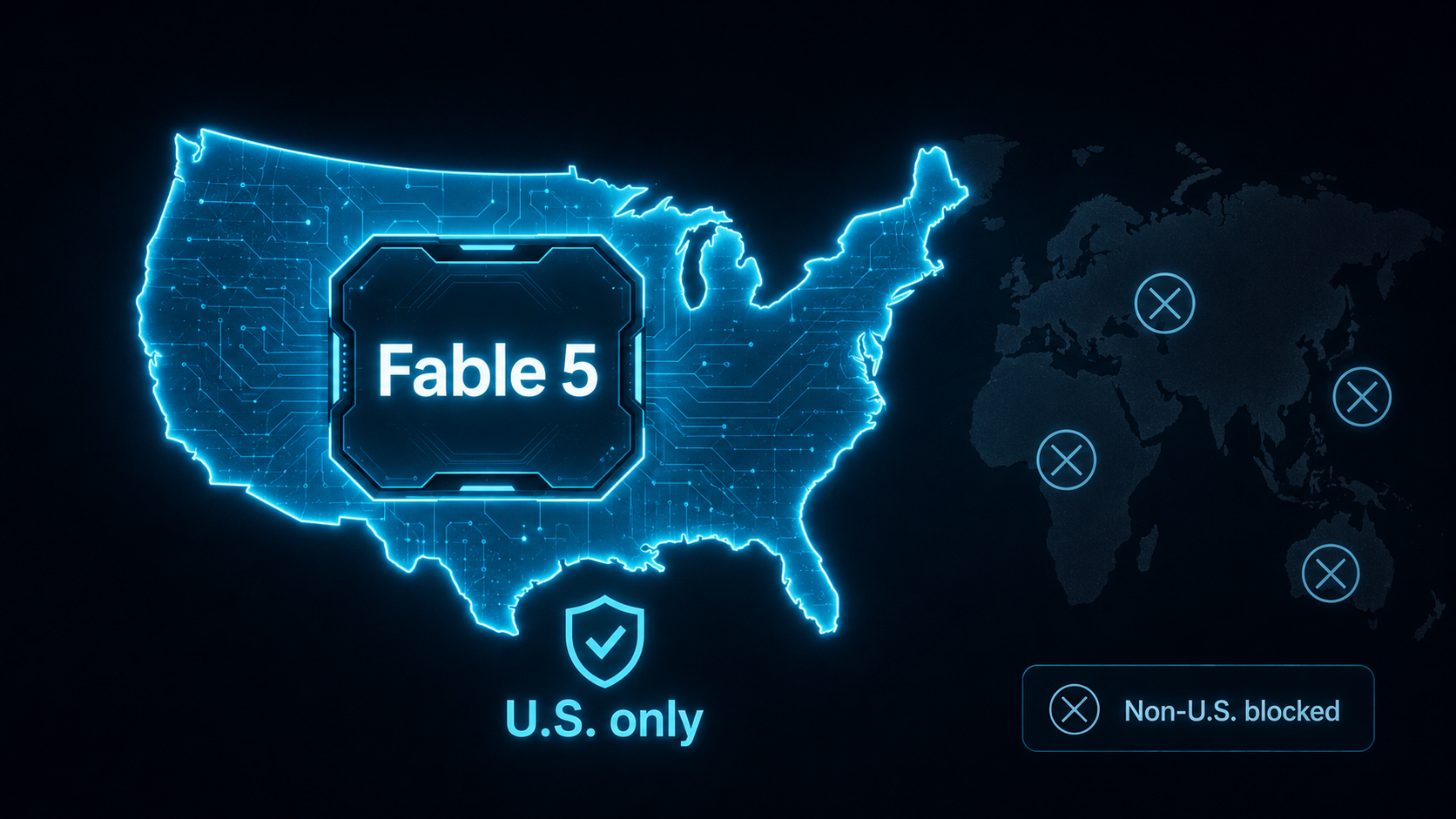
A few days ago, Anthropic suspended access to Fable 5 and Mythos 5, two of its most advanced artificial intelligence models.
Not because of a bug. Not because of a business issue. But because Washington ordered it.
This decision reveals a much broader reality: much of the world uses digital tools it does not control.
When these tools become essential for working, coding, creating, analyzing, selling, or communicating, this dependence becomes a strategic issue.
1. From Mythos to Fable 5, what happened?
To understand Fable 5, you first need to understand Mythos.
Mythos is the name Anthropic has given to a class of extremely advanced models. These models are powerful, but also sensitive, particularly when it comes to cybersecurity. Anthropic therefore began by limiting access to Claude Mythos Preview to a select group of “cyber defenders” and critical infrastructure providers via Project Glasswing. The goal was to allow certain stakeholders to find and fix ZeroDay-type security vulnerabilities without opening the model up to everyone. (Source)
On June 9, Anthropic launched Fable 5.
Fable 5 is described as a “Mythos-class” model, meaning it has the same level of capability but has been made safer for general use. In short: Anthropic wanted to offer the general public some of this power, with safeguards in place. These safeguards are designed to block certain dangerous uses, such as requests related to offensive cybersecurity or other sensitive areas. (Anthropic)
The problem is that Fable 5 remained very close to the level of Mythos. Anthropic even states that Mythos 5 is the same underlying model as Fable 5, with certain safeguards removed for authorized partners. (Anthropic)
In other words: Fable 5 was the “secure” version of a model already considered highly sensitive.
2. The Blockade: When AI Becomes an Export-Controlled Technology
On June 12, 2026—three days later—the U.S. government ordered Anthropic to suspend access to Fable 5 and Mythos 5 for all foreign nationals, whether in the United States or abroad. Anthropic explains that this directive forced it to disable these two models for all its customers in order to remain compliant. Anthropic’s other models are not affected.
The official reason: national security.
The U.S. government was reportedly alerted to a method of bypassing safeguards, known as a jailbreak. In this context, a jailbreak is a way to force an AI to respond despite its security restrictions.
Reuters also reported that Andy Jassy, Amazon’s CEO, was among the tech executives who raised concerns with the U.S. government about the risks of these models. Amazon did not confirm the details of these discussions, but noted that it is common for governments to consult with major cloud providers on security risks. (Reuters)
The key point is this: AI is no longer treated as mere software. It is beginning to be treated as a strategic technology, on par with semiconductors, military tools, or certain sensitive technologies.
This is a huge precedent.
A Deeper Problem
When an AI, an application, or a service runs in the cloud, we don’t really control the tool. We’re accessing infrastructure that belongs to someone else.
And that access can be modified, limited, or cut off.
This is exactly what the Fable 5 case reminds us of: the problem isn’t blocking access to a model.
The real issue is dependence on an entire digital infrastructure controlled elsewhere.
3. The U.S. Monopoly on the Global Digital Economy
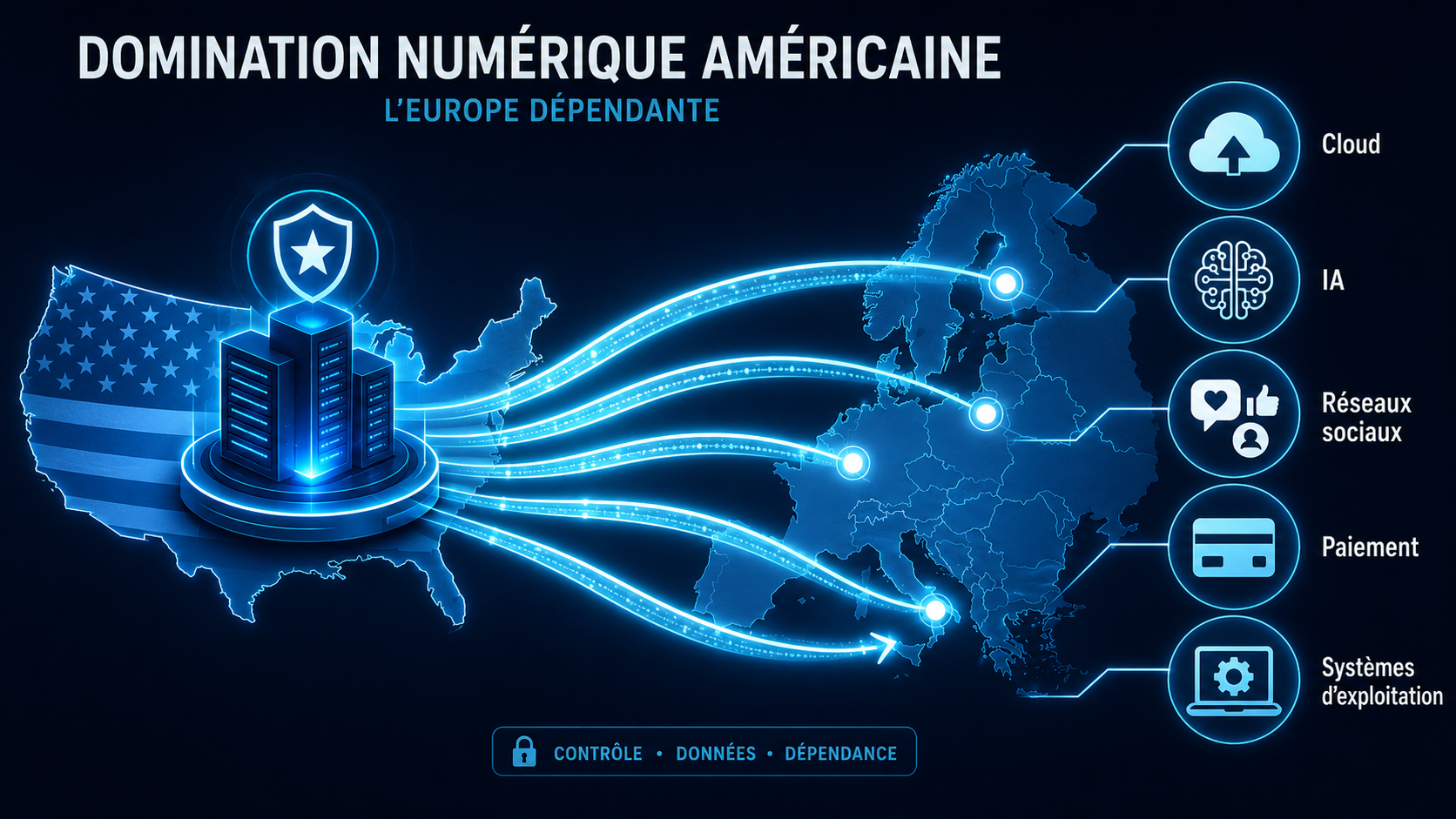
A huge portion of the global digital economy relies on U.S. companies.
The cloud: AWS, Microsoft Azure, and Google Cloud dominate. In the first quarter of 2026, AWS held 28% of the global cloud infrastructure market, Microsoft 21%, and Google Cloud 14%. Together, these three account for 63% of the global market. (CRN) Artificial intelligence: OpenAI, Anthropic, Google DeepMind, Meta, xAI. Most of the most visible and widely used models come from the United States. Operating systems: Windows, macOS, iOS, Android. Social media: Instagram, Facebook, WhatsApp, YouTube, LinkedIn, X. Payments: Visa, Mastercard, Stripe, PayPal.
Now, imagine that a geopolitical conflict, a new law, or a national security decision suddenly restricts access to some of these services.
This isn’t science fiction; it’s already possible, both technically and legally.
We’ve seen this on a small scale with Windows 10. Microsoft ended support for Windows 10 on October 14, 2025. The machines will continue to function, but they will no longer receive standard security updates. For many businesses and government agencies, this creates enormous pressure: migrate, pay for an extension, replace hardware, or accept a security risk.
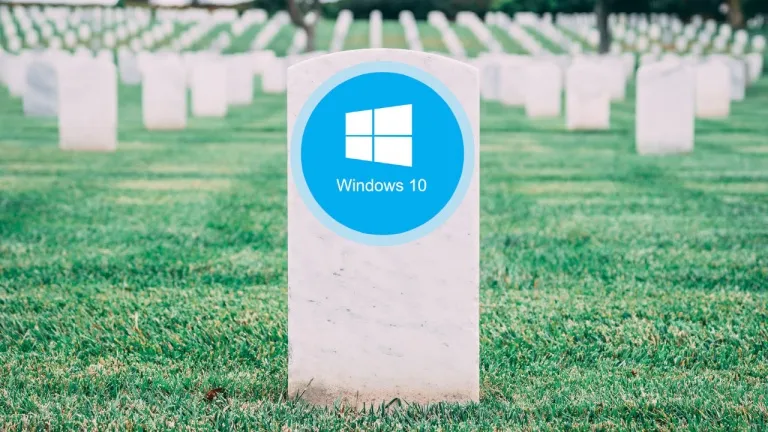
And here, we’re talking about just one operating system.
Imagine applying the same logic to an AI system, a cloud infrastructure, a payment system, or a critical API.
An AWS outage in Europe? Thousands of services slow down or go down. A Stripe outage? Online stores lose their ability to process payments.
This isn’t a conspiracy theory. It’s the reality of today’s digital architecture.
4. Europe: Lots of Rules, Little Power
Europe isn’t sitting idle; it’s regulating heavily: GDPR. AI Act. Digital Markets Act. Digital Services Act.
On paper, the goal makes sense: protect data, limit abuse, regulate tech giants. But in practice, Europe often seems to be shooting itself in the foot.
While it defines frameworks, obligations, and procedures, the United States is building the models, the clouds, the GPUs, the APIs, and the platforms.
The problem isn’t regulation. The problem is regulating before we’ve even built up real technological power.
This is the contrast I also address in my article From Made in China to Designed in China: China has understood that you don’t achieve sovereignty by critiquing others’ technology, but by building your own factories, your own brands, your own platforms, and your own ecosystems.
Europe, on the other hand, sometimes seems to want to achieve sovereignty through administrative regulations. But sovereignty cannot be decreed.
5. Local AI: Sovereignty on an Individual Scale
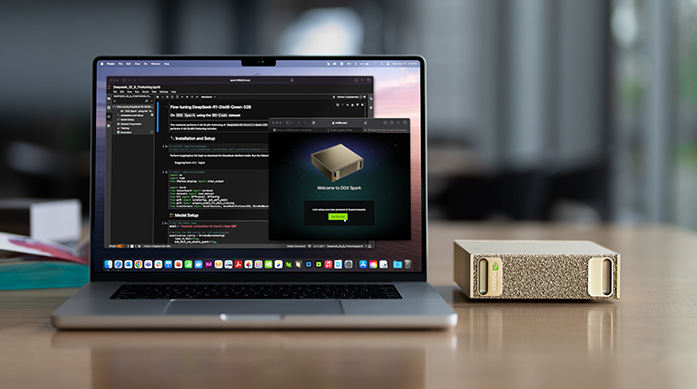
The good news is that a more accessible form of sovereignty already exists:
Local and open-source AI.
Local AI is AI that runs on your machine, your server, your NAS, or a company’s internal infrastructure. No dependence on a subscription. No fear that a model will disappear overnight.
Of course, an on-premises model will always be less powerful than a premium cloud model. Plus, you have to install tools, manage memory, choose the right model, and understand its limitations.
But the concept is powerful: you retain the ability to work even if the internet goes down.
There are already several levels of local AI: from small, practical models to massive ones capable of replacing some cloud-based applications.
Here are a few:
- The largest models: gpt-oss-120b, Qwen3-235B-A22B, Llama 4 Maverick, Mistral Large.
- More accessible models: Llama 3.3 70B, Qwen 3 32B, Mistral Small / Medium
- Lightweight models: Mistral 7B, Qwen 3 8B, Llama 3 8B
6. How much will AI independence cost in 2026?
Good news: you no longer necessarily need a data center to run serious AI locally.
It all depends on the level you’re aiming for. A mid-range PC can already run small, useful models. A machine with plenty of memory can run 30B, 70B, or even larger models. And specialized machines like the NVIDIA DGX Spark can handle up to 200B, with a price tag of around €4,800 (excluding tax) in Europe. (NVIDIA)
It’s not yet mainstream. But it’s not out of reach.
For a company, a studio, or a laboratory, we’re now talking about a budget comparable to that of a very high-end workstation. And since costs are expected to drop significantly in the coming years, this level of autonomy will likely become increasingly accessible. Gartner estimates, for example, that the cost of inference for a very large model could drop by more than 90% by 2030. (Gartner)
The topic deserves an article of its own. AI autonomy is no longer an abstract idea. It is gradually becoming a matter of choice, budget, and will.
Conclusion: Awakening or Voluntary Dependence
Fable 5 will likely not be the last such case.
As models become more powerful, they also become more strategic. And the more strategic they become, the more governments will want to control them.
The United States is defending its interests. That’s normal.
The real problem is that we have built our practices, our businesses, and our work tools on their infrastructure.
Today, much of the world depends on the American cloud, American AI, American operating systems, American social media, and American payment systems.
And when everything relies on a foreign power, that’s a vulnerability.
Three key takeaways.
- First: this kind of bottleneck is likely to happen again. The more powerful these models become, the more governments will want to control them.
- Second: we can reduce this dependence. Alternatives already exist, such as Mistral, Qwen, Llama, gpt-oss, and open-weight models.
- Third: we must act now. Test local models, support sovereign infrastructure, train teams, and stop relying on a single provider.
So the real question is no longer just: what is the best model today?
The real question is:
if our main cloud AI were to disappear tomorrow, could we still work?
If the answer is no, then the problem isn’t technical—it’s strategic.